
How Different Roofing Materials Perform in the Midwest
Short Answer:
Asphalt shingles remain the most common roofing choice in the Midwest because they balance cost, appearance, and performance well. Metal roofing offers exceptional durability and longevity, while synthetic slate and synthetic shake products provide a premium look with lower maintenance than natural materials.
Choosing a new roof is about more than color or curb appeal. The material itself plays a major role in how a home handles Midwest weather over time.
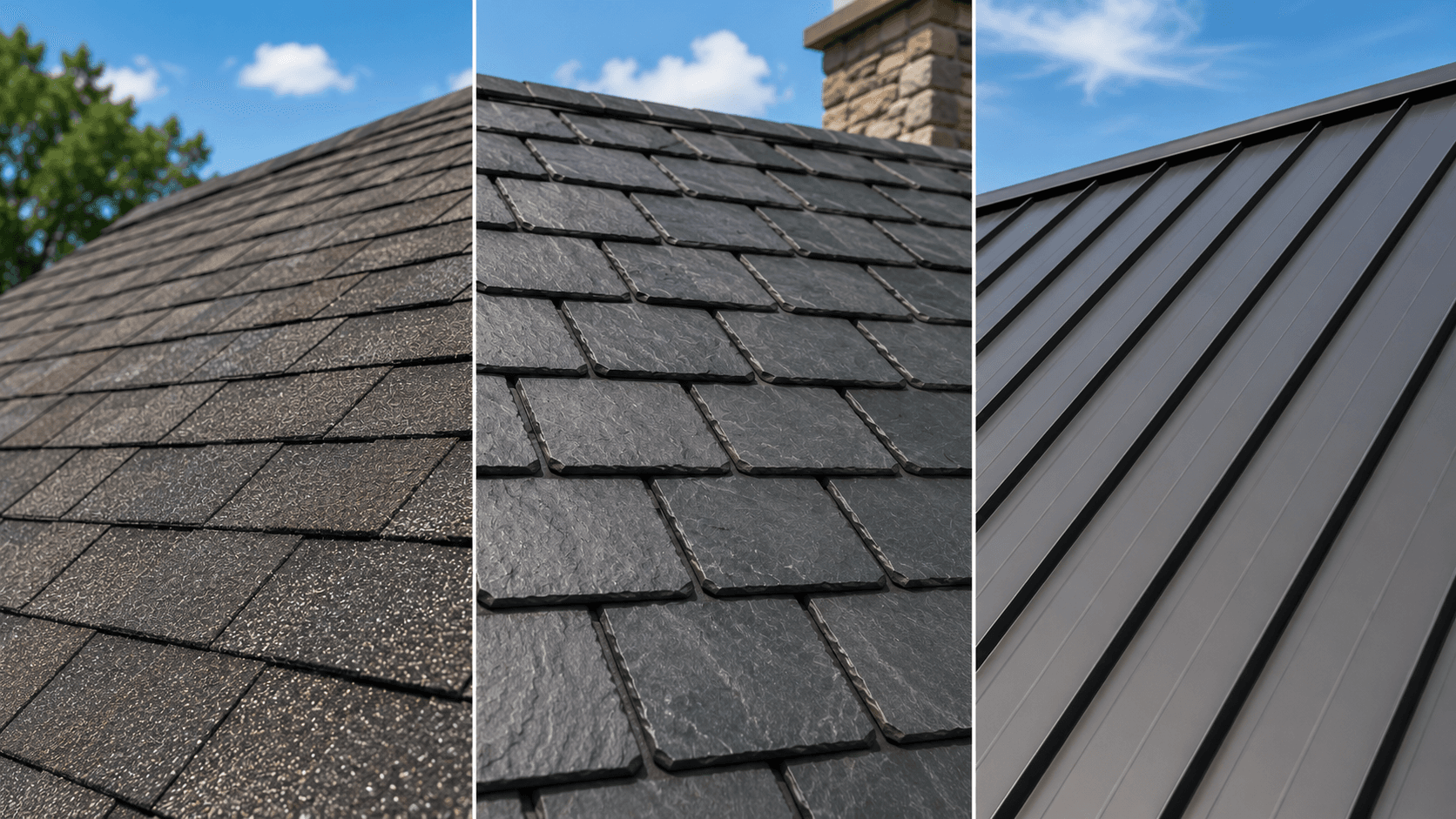
That’s important in a region where roofs regularly face hail, wind, snow, humidity, heat, and rapid temperature swings throughout the year.
Different roofing systems respond to those conditions differently, which is why understanding the strengths and tradeoffs of each option matters before making a decision.
Why are asphalt shingles still the most common roofing material?
Because for many homeowners, they make practical sense.
Architectural asphalt shingles offer a strong balance of affordability, appearance, repairability, and overall performance. Modern shingles are available in a wide range of colors and styles, and many systems are designed to handle wind and impact far better than older products.
They’re also easier and less expensive to repair compared to many premium roofing systems.
That said, Midwest weather can still shorten the lifespan of asphalt roofs over time, especially in areas with repeated hail exposure.
How does metal roofing perform in the Midwest?
Very well—especially long term.
Metal roofing handles temperature swings, snow, and moisture exceptionally well. It’s highly durable, resistant to rot and insects, and can last significantly longer than many asphalt systems when properly installed.
Metal roofs also shed snow and rain efficiently, which can help reduce moisture-related issues in certain situations.
One thing homeowners should understand, however, is that hail can sometimes leave visible denting on metal roofing systems. In some cases, that damage is considered cosmetic rather than functional. Depending on the insurance policy, cosmetic denting may not be covered unless the homeowner has specific cosmetic damage coverage or endorsements included in their policy.
That doesn’t make metal roofing a poor choice—it’s simply part of understanding how different materials respond to hail in the Midwest.
The tradeoff is typically cost. Metal roofing systems require a higher upfront investment, and installation quality becomes extremely important because mistakes are more difficult to correct later.
What are synthetic slate and synthetic shake roofs?
Synthetic slate and synthetic shake roofing systems are designed to replicate the appearance of natural materials while improving durability and reducing maintenance concerns.
Natural slate and cedar shake have a beautiful appearance, but they also come with weight, upkeep, and weathering challenges. Synthetic alternatives are engineered to provide a similar look while resisting moisture, cracking, insects, and many forms of weather-related wear more effectively.
For homeowners who want a more distinctive or upscale appearance without the maintenance demands of natural materials, synthetic products can be an appealing option.
How do synthetic roofing systems hold up to storms?
Generally, very well.
Many synthetic roofing products are engineered with impact resistance in mind, which can make them particularly attractive in hail-prone regions like the Midwest. They also tend to handle expansion and contraction better than some natural materials.
As with any roofing product, though, performance still depends heavily on installation quality and the overall roofing system beneath the surface.
Which roofing material lasts the longest?
In most cases, metal roofing systems offer the longest lifespan among the three.
Synthetic slate and shake systems can also perform for decades when properly installed, while asphalt shingles typically have a shorter real-world lifespan in the Midwest due to repeated weather exposure.
But longevity alone doesn’t determine the best fit. Budget, appearance, maintenance expectations, and the design of the home all play important roles in the decision.
Is one roofing material always better than the others?
Not necessarily.
The “best” roofing system depends on the priorities of the homeowner and the needs of the home itself. Some homeowners prioritize long-term durability. Others prioritize aesthetics, repairability, or overall cost.
A roofing material that makes perfect sense for one home may not be the right fit for another.
That’s why roofing decisions work best when they’re based on how a homeowner actually lives—not just product marketing.
What should homeowners focus on most when comparing roofing systems?
The system matters more than the material alone.
Ventilation, flashing, underlayment, drainage, and installation quality all play major roles in how any roof performs over time. Even premium materials can underperform if the system around them isn’t built correctly.
A well-installed roofing system using good materials will almost always outperform a poorly installed “top-tier” product.
Midwest weather is demanding on every roof. The question isn’t whether a material is perfect—it’s how well it matches the home, the climate, and the homeowner’s long-term goals.
Understanding those differences helps homeowners make decisions with confidence instead of simply choosing whatever sounds best in a brochure.
Request A Free Inspection!
+ 0% Interest for 24 Months

Start With a Free Roofing or Exterior Inspection in the Omaha-Lincoln Area
Begin your home or business upgrade with zero pressure and clear answers. Schedule your free home exterior review today using our easy online form, by phone, or in person at one of our local offices. Discover why so many Omaha and Lincoln neighbors trust McCoy Roofing for clarity, craftsmanship, and service that lasts.
Contact Us
-1213x485.jpg&w=1920&q=75&dpl=dpl_GYMrc4F7ZaFFq7iHFffXS1fRydYL)
Monday - Friday: 8am to 5pm
Monday - Friday: 8am to 5pm
Monday - Friday: 8am to 5pm
Monday - Friday: 8am to 5pm
Charlotte, NC 28210
Monday - Friday: 8am to 5pm