
What Do Snow Melt Patterns Reveal About Your Roof? A Winter Guide for Homeowners
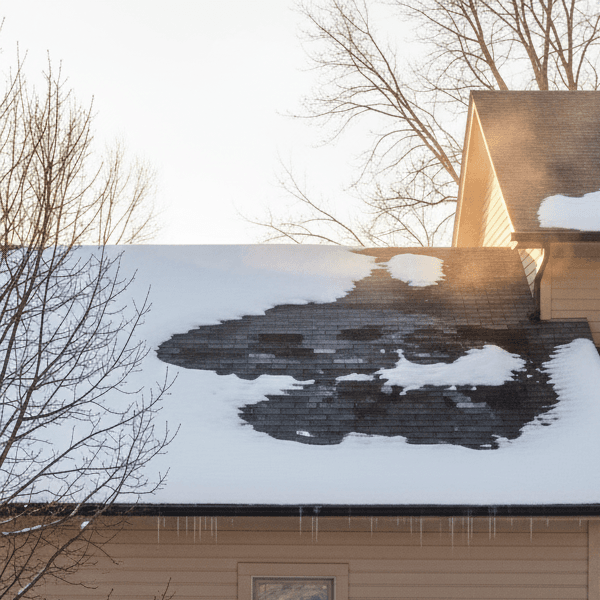
When snow hits your roof, it does more than decorate your home for the season—it tells you how your attic and roof system are performing. Uneven melting, bare patches, stubborn untouched snow, and sharp melt lines can all reveal hidden issues long before they become expensive repairs.
To help homeowners understand what their snow patterns mean, we spoke with McCoy Roofing’s Operations Manager Paul Browne and Sales Manager Zach Varadi.
What Are Snow Melt Patterns—and Why Should Homeowners Pay Attention to Them?
According to Paul, snow melt patterns are one of the simplest diagnostic tools homeowners overlook.
“Snow melt shows you exactly where heat is escaping from your attic,” Paul explains. “If one section of your roof melts faster than the others, that’s usually a sign that warm air is gathering under that spot.”
Zach adds, “Think of it like a big thermal map. Even if you can’t see inside your attic, the snow shows you what’s going on.”
In short: Uneven snow melt = uneven attic temperature. And temperature inconsistencies almost always point to ventilation or insulation problems.
What Does It Mean When Snow Melts Faster in Some Areas?
Paul breaks it down simply: “Fast-melting patches typically mean you have warm air leaking or insulation that’s not doing its job.”
Common causes include:
- Gaps in attic insulation
- Warm interior air leaking into the attic
- Insulation settling over time
- Blocked soffit vents causing heat to pool
Zach notes that homeowners often don’t notice insulation issues until winter. “When the snow melts in blotches, that’s your first sign something’s not balanced up there.”
What About Snow That Doesn’t Melt? Is That a Good Thing—or a Warning Sign?
It depends.
“If snow sits evenly across the whole roof, that’s usually a good sign,” Zach explains. “That means your attic temperature is consistent and you’re not losing heat through the roof deck.”
However, stubborn snow on just one area of the roof can indicate:
- Restricted airflow
- A cold pocket in the attic
- Vents that aren’t pulling air across properly
Paul adds, “Consistent temperatures across the attic are what you want. Consistent snow is usually a sign of that. But snow staying only in certain areas may point to airflow disruptions.”
Do Sharp Melt Lines Near the Eaves Mean Ice Dams Are Coming?
“Absolutely,” Paul says. “When you see snow melting from the top down but staying frozen at the gutter line, that’s the classic setup for an ice dam.”
Why does it happen:
- Warm attic air melts snow high on the roof
- Meltwater flows to the colder eaves
- Water refreezes
- Ice begins to pile up
Zach explains, “Sharp melt lines at the bottom of the roof mean the top is too warm and the edges are too cold—and that imbalance is what causes ice dams.”
Homeowners who notice this pattern early can often stop an ice dam before it forms by addressing airflow issues.
What Should Homeowners Do If They Notice Odd Snow Melt Patterns?
Paul’s advice is simple. “Take a picture and make notes. Snow melt is one of the easiest ways to spot problems early.”
Zach adds, “You don’t need to climb the roof. Just look from the ground. If something looks uneven, call us and we’ll check it out.”
Key steps:
- Document what you see after cold nights
- Pay attention to consistent bare patches
- Watch for snow that melts in stripes or streaks
- Check for sharp melt lines near gutters
- Schedule an attic or roof inspection if anything looks unusual
Balanced attic airflow leads to balanced snow melt—and that leads to a healthier roof.
The Bottom Line: What Is Your Roof Trying to Tell You This Winter?
Snow melt patterns give homeowners a free, visual diagnostic of how their attic and roofing system are performing. If snow melts unevenly, in patches, or forms distinct melt lines near the eaves, your attic temperature may be out of balance—and that can lead to higher energy bills, condensation, or ice dams.
If you’re unsure whether your snow patterns are normal, McCoy Roofing can help.
Visit mccoyroofing.com/blog for more winter home care insights—or schedule a winter roof inspection today.
Request A Free Inspection!
+ 0% Interest for 24 Months

Start With a Free Roofing or Exterior Inspection in the Omaha-Lincoln Area
Begin your home or business upgrade with zero pressure and clear answers. Schedule your free home exterior review today using our easy online form, by phone, or in person at one of our local offices. Discover why so many Omaha and Lincoln neighbors trust McCoy Roofing for clarity, craftsmanship, and service that lasts.
Contact Us
-1213x485.jpg&w=1920&q=75&dpl=dpl_GYMrc4F7ZaFFq7iHFffXS1fRydYL)
Monday - Friday: 8am to 5pm
Monday - Friday: 8am to 5pm
Monday - Friday: 8am to 5pm
Monday - Friday: 8am to 5pm
Charlotte, NC 28210
Monday - Friday: 8am to 5pm